
High Blood Pressure: What Your Numbers Mean—and What Your Labs Can Tell You
Filed under: Biomarkers Healthy Aging Heart Health
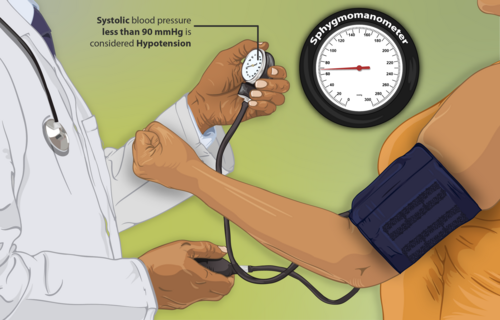
High blood pressure is one of the most common health conditions in adults—and one of the easiest to overlook.
The problem is that hypertension usually doesn’t announce itself. You can have blood pressure that is damaging your arteries, heart, brain, and kidneys without feeling sick at all.
That’s why blood pressure is sometimes called a “silent” risk factor.
The good news is that blood pressure is measurable, modifiable, and treatable. Lifestyle changes can make a meaningful difference, and medications are highly effective when they are needed.
But understanding blood pressure requires looking beyond a single number.
Your blood pressure is one piece of a much larger picture that includes your cholesterol, blood glucose, kidney function, body composition, diet, physical activity, sleep, medications, and overall cardiovascular risk.
This guide will help you understand that bigger picture.
First: What Exactly Is Blood Pressure?
Every time your heart beats, it pushes blood through your arteries.
That creates pressure against the artery walls.
A blood-pressure reading contains two numbers:
Systolic blood pressure is the top number. It represents the pressure in your arteries when your heart contracts.
Diastolic blood pressure is the bottom number. It represents the pressure in your arteries while your heart is relaxing between beats.
For example:
120/80 mm Hg
means a systolic pressure of 120 mm Hg and a diastolic pressure of 80 mm Hg.
Both numbers matter.
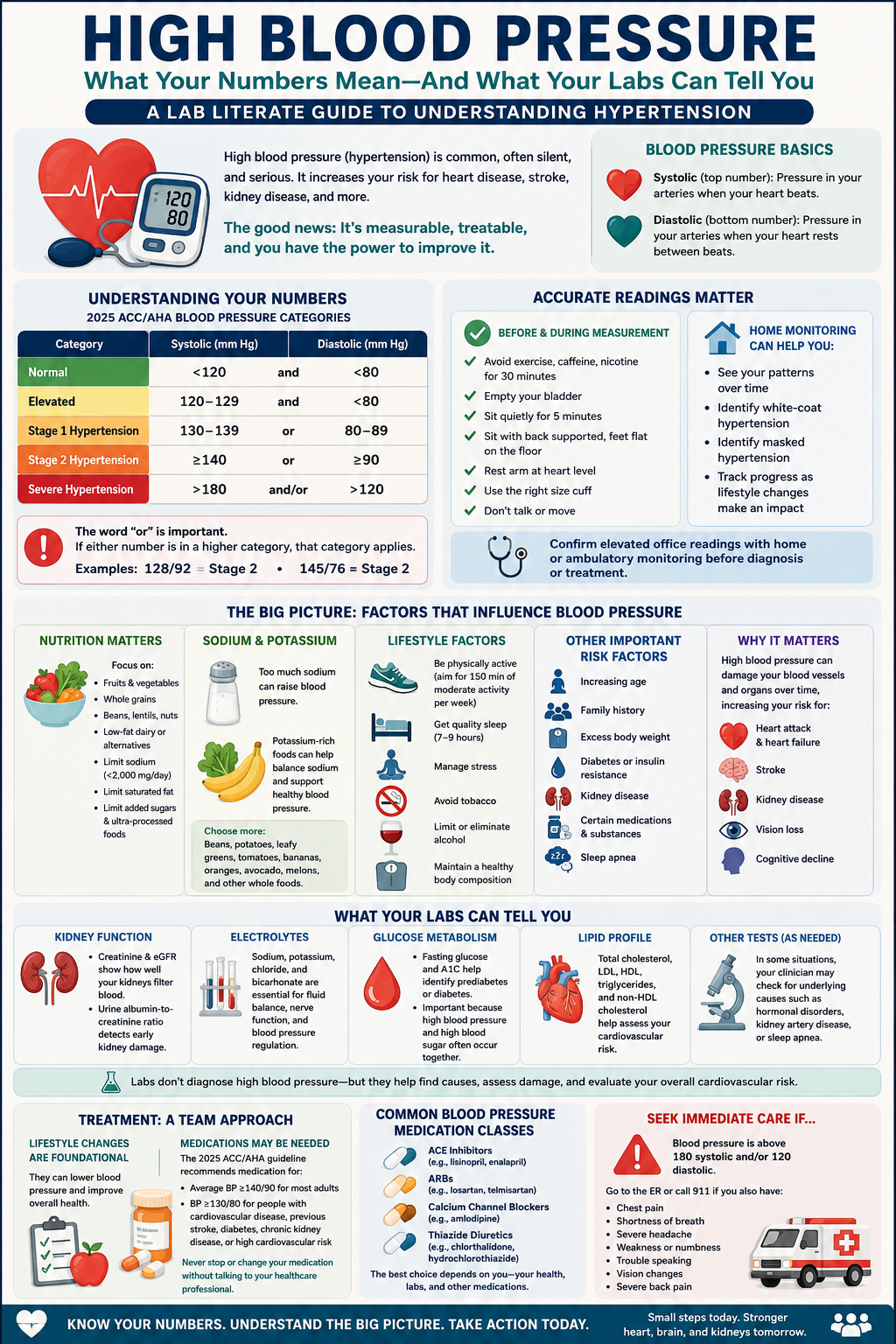 Understanding Your Blood Pressure Numbers
The current U.S. ACC/AHA classification is:
Category |
Systolic |
Diastolic |
Normal |
<120 |
and <80 |
Elevated |
120–129 |
and <80 |
Stage 1 hypertension |
130–139 |
or 80–89 |
Stage 2 hypertension |
≥140 |
or ≥90 |
Severe hypertension |
>180 |
and/or >120 |
Notice the word “or.”
If either your systolic or diastolic pressure falls into a higher category, the higher category applies.
For example:
128/92
is not simply “almost normal.” The diastolic reading of 92 falls into Stage 2 hypertension.
Likewise:
145/76
falls into Stage 2 hypertension because of the systolic pressure.
The 2025 ACC/AHA guideline continues to define Stage 1 hypertension as 130–139 systolic or 80–89 diastolic, and Stage 2 as ≥140 systolic or ≥90 diastolic.
One reading does not necessarily tell the whole story
Blood pressure naturally fluctuates.
It can temporarily rise because of:
Stress or anxiety
Exercise
Caffeine
Nicotine
Pain
A full bladder
Poor sleep
Certain medications
Improper measurement technique
That’s why hypertension shouldn’t generally be diagnosed from one isolated reading.
The U.S. Preventive Services Task Force recommends confirming elevated office blood pressure with measurements outside the clinical setting—such as home blood-pressure monitoring or ambulatory blood-pressure monitoring—before starting treatment.
Why Is High Blood Pressure a Problem?
Think of your arteries as a sophisticated network of flexible pipes.
They aren’t rigid tubes. Healthy arteries expand and contract in response to the demands placed on the cardiovascular system.
Persistently elevated pressure places additional mechanical stress on the arterial walls.
Over time, hypertension can contribute to:
Atherosclerosis
Heart disease
Heart attack
Heart failure
Stroke
Kidney disease
Cognitive decline and vascular brain injury
Damage to the small blood vessels in the eyes
The higher the blood pressure and the longer it remains uncontrolled, the greater the potential damage.
Hypertension is therefore not just a blood-pressure problem.
It is a vascular-health problem.
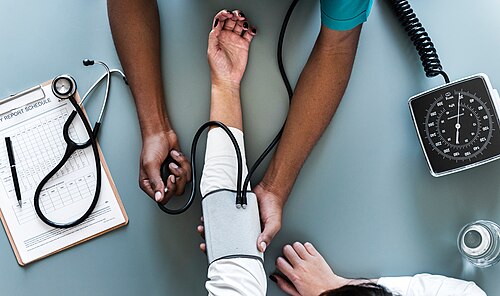
Why Don’t Most People Feel High Blood Pressure?
This is one of the most important things to understand.
High blood pressure often has no symptoms.
You can have hypertension for years and feel completely normal.
That doesn’t mean your cardiovascular system is normal.
The only way to know whether your blood pressure is elevated is to measure it.
This is one reason routine screening matters.
How to Get an Accurate Blood Pressure Reading
An inaccurate measurement can make a healthy person’s blood pressure look high—or make elevated blood pressure look better than it really is.
For a more reliable reading:
Before measuring
Avoid exercise for about 30 minutes.
Avoid caffeine and nicotine beforehand.
Empty your bladder.
Sit quietly for several minutes.
Don’t talk during the measurement.
During measurement
Sit with your back supported.
Keep both feet flat on the floor.
Don’t cross your legs.
Rest your arm on a surface at heart level.
Use an appropriately sized upper-arm cuff.
Keep still and quiet.
The American Heart Association specifically emphasizes proper positioning and standardized measurement technique.
Home monitoring can be extremely useful
If your blood pressure is elevated, keeping a home blood-pressure log can reveal something that a single doctor’s-office reading cannot:
your pattern over time.
For example, you may discover that your blood pressure is:
Normal at home but elevated at the doctor’s office
Normal during the day but elevated at night
Consistently elevated
Higher in the morning
Improving as lifestyle changes take effect
White-Coat Hypertension and Masked Hypertension
Blood pressure doesn’t always behave the same way in a doctor’s office and at home.
White-coat hypertension
Blood pressure is elevated in the medical setting but normal outside it.
Masked hypertension
Blood pressure appears normal in the medical setting but is elevated outside it.
Both are reasons that home or ambulatory monitoring can provide valuable information.
What Causes High Blood Pressure?
Hypertension usually isn’t caused by one single factor.
For most adults, it develops through an interaction between genetics, aging, environment, lifestyle, metabolic health, and other medical conditions.
Important risk factors include:
Increasing age
Family history
Excess body weight
Physical inactivity
High sodium intake
Low intake of potassium-rich foods
Excess alcohol
Tobacco use
Poor sleep
Certain medications
Kidney disease
Diabetes
Some endocrine disorders
The World Health Organization identifies age, genetics, excess weight, physical inactivity, high-salt diets, alcohol consumption, kidney disease, and diabetes among important risk factors.
And here’s an important point:
Having a genetic predisposition does not mean lifestyle is irrelevant.
It means the starting point may be different.
Sodium: One of the Most Important Dietary Factors
Sodium and blood pressure have a well-established relationship.
For some people, reducing sodium produces a particularly strong reduction in blood pressure. This is sometimes called salt sensitivity.
The relationship isn’t identical for everyone, but population-level evidence consistently supports reducing excessive sodium intake.
The World Health Organization recommends adults consume less than 2,000 mg of sodium per day, equivalent to less than 5 grams of salt per day.
The DASH-Sodium trial demonstrated that reducing sodium lowered blood pressure, and combining sodium reduction with the DASH dietary pattern produced an even greater effect.
Where does most sodium come from?
It isn’t necessarily the salt shaker.
Large amounts can come from:
Packaged foods
Restaurant meals
Sauces
Condiments
Canned foods
Bread and baked products
Convenience foods
Processed meat
Salty snacks
For someone trying to lower blood pressure, reading the Nutrition Facts label can be more useful than simply avoiding the salt shaker.
Potassium: The Other Side of the Sodium Story
Potassium is an important mineral for cardiovascular health.
Higher dietary potassium intake is associated with lower blood pressure in many populations, and potassium can counter some of sodium’s effects on blood pressure.
Potassium-rich foods include:
Beans
Lentils
Potatoes
Sweet potatoes
Winter squash
Leafy greens
Tomatoes
Bananas
Oranges
Melons
Avocado
Other fruits and vegetables
This is one reason a diet centered around minimally processed plant foods can be particularly useful for cardiovascular health.
But don’t automatically take potassium supplements
More potassium isn’t necessarily better.
People with kidney disease or certain medications can develop dangerously high potassium levels.
For most people, the safer strategy is to obtain potassium primarily through food unless a healthcare professional recommends supplementation.
What Does a Heart-Healthy Diet Look Like?
The DASH dietary pattern has some of the strongest evidence for lowering blood pressure.
It emphasizes:
Fruits
Vegetables
Whole grains
Beans and legumes
Nuts and seeds
Lower-fat dairy or appropriate alternatives
Limited sodium
Limited saturated fat
Limited added sugars
A whole-food, plant-based dietary pattern can overlap substantially with these principles.
But there’s an important distinction:
“Plant-based” doesn’t automatically mean “blood-pressure friendly.”
A diet can be vegan and still contain large amounts of:
Sodium
Refined carbohydrates
Added sugars
Saturated fat
Ultra-processed foods
The quality of the overall dietary pattern matters.
What About Weight?
Body weight is one factor that can influence blood pressure, but it shouldn’t be viewed as the only—or even always the most important—factor.
Blood pressure can be elevated in people across the weight spectrum.
If someone has excess body fat, losing weight can reduce blood pressure. But improvements in diet quality, sodium intake, physical activity, sleep, and metabolic health can also matter.
The 2025 ACC/AHA guideline specifically recommends maintaining or achieving a healthy weight as part of blood-pressure prevention and treatment.
Exercise and Blood Pressure
Your cardiovascular system adapts to physical activity.
Regular aerobic activity can improve cardiovascular fitness and help lower blood pressure.
Examples include:
Brisk walking
Cycling
Swimming
Hiking
Dancing
Jogging
Other moderate-intensity aerobic activities
Resistance training also has cardiovascular benefits and can be part of a blood-pressure-friendly exercise program.
The WHO recommends adults obtain at least 150 minutes of moderate-intensity aerobic activity per week, or 75 minutes of vigorous activity, along with muscle-strengthening activities on at least two days per week.
If you’re currently inactive, you don’t have to go from zero to 150 minutes overnight.
Start where you are and build gradually.
Stress, Sleep, and Blood Pressure
Blood pressure is influenced by more than food and exercise.
Chronic stress, inadequate sleep, and certain sleep disorders can all contribute to cardiovascular risk.
Stress activates the sympathetic nervous system and hormonal pathways that can temporarily raise blood pressure.
Poor sleep can also interfere with metabolic and cardiovascular regulation.
One condition deserves particular attention:
Sleep apnea
Obstructive sleep apnea is associated with hypertension and can be particularly important when blood pressure is difficult to control.
If someone snores heavily, has witnessed pauses in breathing during sleep, wakes with headaches, or experiences excessive daytime sleepiness, discussing sleep quality with a healthcare professional may be worthwhile.
Alcohol and Blood Pressure
Alcohol can raise blood pressure, particularly with higher levels of consumption.
The 2025 ACC/AHA guideline recommends reducing or eliminating alcohol as part of blood-pressure prevention and treatment.
For cardiovascular health, less is generally better when it comes to alcohol.
What Can Your Laboratory Tests Tell You?
This is where blood pressure becomes especially interesting from a Lab Literate perspective.
There isn’t one blood test that diagnoses hypertension.
Blood pressure is measured directly.
But laboratory testing can help identify:
Conditions contributing to hypertension
Damage associated with hypertension
Other cardiovascular risk factors
Whether certain medications may require monitoring
Kidney Function: A Critical Piece of the Puzzle
The kidneys and blood pressure have a remarkably close relationship.
The kidneys regulate:
Sodium
Water balance
Electrolytes
Blood volume
Several hormonal pathways involved in blood-pressure regulation
And the relationship works both ways.
Kidney disease can contribute to hypertension, while chronic hypertension can damage the kidneys.
Important laboratory measurements include:
Creatinine
Creatinine is a waste product produced by normal muscle metabolism.
It is commonly used to estimate kidney filtration.
eGFR
Estimated glomerular filtration rate provides an estimate of how well the kidneys are filtering blood.
Urine albumin-to-creatinine ratio
This is particularly useful because albumin leaking into the urine can be an early sign of kidney damage.
For someone with hypertension, kidney health deserves attention even when kidney function appears normal.
Electrolytes: Sodium, Potassium, and More
Blood tests commonly measure:
Sodium
Potassium
Chloride
Bicarbonate/CO₂
These electrolytes are important for fluid balance, nerve function, and cardiovascular physiology.
Potassium is particularly important because abnormal potassium levels can sometimes point toward kidney problems, hormonal disorders, or medication effects.
Glucose and A1C
Blood pressure doesn’t exist in isolation from metabolic health.
High blood pressure frequently overlaps with:
Insulin resistance
Prediabetes
Type 2 diabetes
Abdominal obesity
Abnormal blood lipids
Two common laboratory markers are:
Fasting glucose
Measures blood glucose after fasting.
Hemoglobin A1C
Provides an estimate of average blood glucose over approximately the previous two to three months.
When evaluating cardiovascular risk, blood pressure and glucose metabolism should be considered together.
Cholesterol and Cardiovascular Risk
A person with high blood pressure may also want to pay attention to their lipid profile.
Common measurements include:
Total cholesterol
LDL cholesterol
HDL cholesterol
Triglycerides
Non-HDL cholesterol
LDL cholesterol is an important causal factor in atherosclerotic cardiovascular disease.
Blood pressure and cholesterol therefore represent different pathways to cardiovascular risk that can interact with one another.
Lowering one doesn’t erase the importance of the other.
Other Tests May Be Appropriate in Certain Situations
Most people with uncomplicated hypertension don’t need an enormous panel of specialized hormone tests.
But if hypertension is unusually severe, begins at an unexpected age, is difficult to control, or has unusual laboratory findings, a clinician may investigate secondary causes.
Depending on the situation, this can include evaluation for:
Kidney disease
Primary aldosteronism
Thyroid disorders
Sleep apnea
Renal artery disease
Certain adrenal disorders
Medication or substance effects
The key point is:
Testing should be guided by the clinical situation rather than ordering every possible test.
Can Medications Affect Blood Pressure?
Absolutely.
Some medications and substances can raise blood pressure, including certain:
NSAID pain relievers
Decongestants
Hormonal medications
Steroids
Stimulants
Some psychiatric medications
Certain supplements
Excessive caffeine
Some recreational substances
This is one reason it’s important to give your healthcare professional a complete list of medications and supplements.
When Are Blood Pressure Medications Needed?
Lifestyle changes are an important part of treatment.
But lifestyle modification and medication aren’t competing philosophies.
Sometimes both are necessary.
The 2025 ACC/AHA guideline recommends medication for adults with an average blood pressure of at least 140/90 mm Hg, and recommends earlier medication treatment for selected people with blood pressure ≥130/80 who have cardiovascular disease, previous stroke, diabetes, chronic kidney disease, or sufficiently elevated predicted cardiovascular risk.
For lower-risk adults with blood pressure ≥130/80, the guideline recommends a period of lifestyle modification before medication if the blood pressure remains elevated.
Treatment decisions should therefore be individualized.
Don’t stop or reduce blood-pressure medication because your numbers improve without discussing it with your healthcare professional.
The improvement may actually be evidence that the treatment is working.
Common Blood Pressure Medications
Several medication classes are commonly used.
ACE inhibitors
Examples include lisinopril and enalapril.
ARBs
Examples include losartan and telmisartan.
Calcium-channel blockers
Examples include amlodipine and related medications.
Thiazide-type diuretics
Examples include chlorthalidone and hydrochlorothiazide.
The best medication—or combination of medications—depends on the person’s blood pressure, kidney function, electrolytes, cardiovascular risk, other medical conditions, age, and other medications.
What About “Natural” Blood Pressure Supplements?
This is an area where caution is warranted.
A supplement marketed as “natural blood pressure support” isn’t automatically safe or effective.
Some supplements can:
Have little evidence behind them
Interact with medications
Affect potassium
Affect kidney function
Alter blood pressure unpredictably
Contain multiple ingredients with uncertain doses
Food-based approaches have a much stronger foundation.
Before taking a supplement specifically to lower blood pressure, discuss it with a healthcare professional—especially if you already take blood-pressure medication.
The Blood Pressure–Kidney–Heart Connection
One of the most useful ways to understand hypertension is to stop thinking of the cardiovascular system as separate organs.
Instead, think of a network:
Blood pressure → blood vessels → heart → kidneys → brain
These systems continuously influence one another.
High blood pressure can damage blood vessels.
Damaged blood vessels contribute to cardiovascular disease.
Hypertension can damage the kidneys.
Kidney dysfunction can make blood pressure harder to control.
And vascular disease can increase the risk of stroke and cognitive impairment.
That’s why managing blood pressure is about much more than making a number on a home monitor look better.
It’s about protecting the organs that depend on healthy blood vessels.
Your Blood Pressure Checklist
If you’re trying to improve your blood pressure, start with the fundamentals.
Measure
☐ Know your blood pressure numbers.
☐ Use proper measurement technique.
☐ Consider home monitoring if your readings are elevated.
☐ Look at trends rather than obsessing over a single reading.
Eat
☐ Emphasize vegetables and fruit.
☐ Eat beans and other legumes regularly.
☐ Choose whole grains.
☐ Include nuts and seeds in appropriate portions.
☐ Reduce highly processed foods.
☐ Pay attention to sodium.
☐ Include potassium-rich foods when medically appropriate.
☐ Limit foods high in saturated fat.
Move
☐ Aim for regular aerobic activity.
☐ Include resistance training.
☐ Reduce prolonged sitting.
Lifestyle
☐ Prioritize adequate sleep.
☐ Address chronic stress.
☐ Avoid tobacco.
☐ Limit or eliminate alcohol.
☐ Maintain a healthy body composition.
Labs and medical care
☐ Know your kidney function.
☐ Monitor glucose/A1C when appropriate.
☐ Understand your lipid profile.
☐ Review medications and supplements.
☐ Follow up regularly with your healthcare professional.
When Is High Blood Pressure an Emergency?
A blood pressure reading above 180 systolic and/or 120 diastolic is considered severe and requires prompt attention.
If the reading is this high, repeat it after sitting quietly and following proper measurement technique.
If it remains extremely high, contact a healthcare professional promptly.
If very high blood pressure is accompanied by symptoms such as chest pain, shortness of breath, weakness or numbness, difficulty speaking, severe headache, back pain, or changes in vision, call 911.
These symptoms can indicate a hypertensive emergency or another serious medical condition.
The Bigger Picture
High blood pressure is not simply a number on a medical chart.
It is a measurable signal about the forces acting on your cardiovascular system.
And that signal becomes much more useful when you put it together with your other health data.
Your:
Blood pressure
plus your:
LDL cholesterol
plus your:
A1C
plus your:
kidney function
plus your:
activity level
plus your:
diet
plus your:
sleep
plus your:
family history
can tell a much more complete story about cardiovascular risk than any single measurement.
That is the Lab Literate approach:
Don’t just ask, “Is this lab value normal?”
Ask:
“What does this number mean in the context of my whole cardiovascular system?”
The Takeaway
High blood pressure is common, often silent, and highly treatable.
The first step is knowing your numbers.
The next step is understanding what those numbers mean.
From there, lifestyle factors—including diet quality, sodium intake, physical activity, body composition, sleep, alcohol, and tobacco exposure—can all play a role.
Laboratory testing adds another layer by helping evaluate kidney function, glucose metabolism, cholesterol, electrolytes, and other factors that influence cardiovascular health.
And when lifestyle changes aren’t enough, medications can dramatically reduce the risk associated with hypertension.
The goal isn’t simply to lower a number.
The goal is to protect your heart, brain, kidneys, blood vessels, and vision for the long term.